


Palaces in Florence Italy: timetable, descriptions, photos
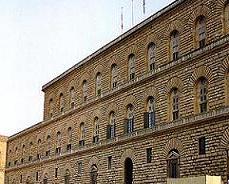
The Pitti Palace is situated on the hill of Boboli and was constructed in the second half of the XV by Luca Pitti, rich florentine merchant. Giorgio Vasari attributes the plan to Filippo Brunelleschi... [...]
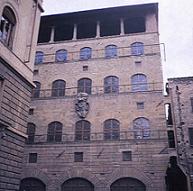
The Davanzati Palace (center of the Davanzati Museum) was constructed at the beginning of XIV the century. At the beginning of XX the century it was acquired by the antiquarian Elia Volpi that... [...]
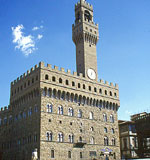
Formally known as Palazzo della Signoria, the Palazzo Vecchio (with a beautiful high tower of 94 meters) has a simple front facing the Piazza della Signoria.
However the courtyard and the... [...]
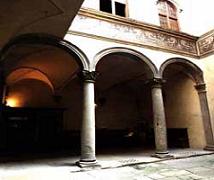
In the district of Santa Croce, at the beginning of Via de' Benci, opposite the tower of the Alberti (XIII century) with loggia formed by two columns include the Palace Horne built in the fifteenth... [...]
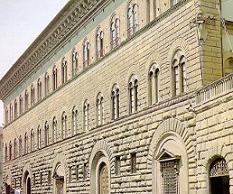
The 15th century Medici-Riccardi Palace (Palazzo Medici-Riccardi) contains some great Renaissance art including the 'Procession of the Magi'. The palace is located in central Florence.
The... [...]
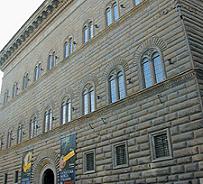
The Strozzi Palace of Florence is situated between the Strozzi public square and Tornabuoni street. The Strozzi Palace always has been a symbol of the florentine architecture.
Its... [...]
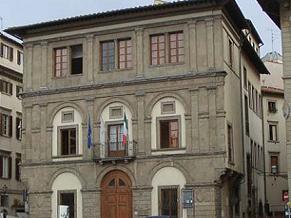
Located in the Santa Croce area at the beginning of Via dell'Anguillara where in the Middle Ages arise the Porta San Simone, the palace Cocchi Serristori is attributed to Baccio d'Agnolo and Giuliano... [...]
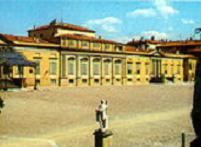
At the end of the Boboli Gardens there is a large square where stands the Palazzina della Meridiana, a neoclassical building started in 1778 by Gaspare Maria Paoletti and terminated by Pasquale... [...]
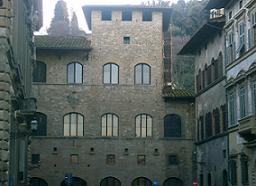
The Mozzi Palace is situated in the center of Florence at the numbers 2, 121 and 123 of via San Niccolò and was built in the XIII century.
In the XIX century Bardini bought the palace... [...]
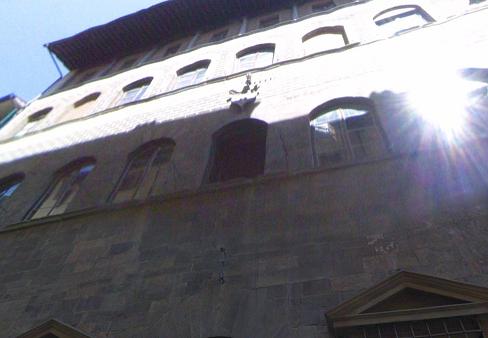
Located in the de' Pandolfini street after a sequence of beautiful palaces (Palazzo Arrighi, Palazzo Medici-Tornaquinci and Palace de' Rittafè) Galli Tassi palace was built in the early sixteenth... [...]
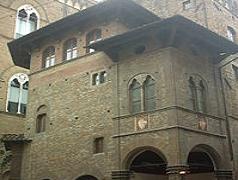
A corridor designed by Buontalenti and built in 1569 connecting the two salons Orsanmichele with the Palazzo dell'Arte della Lana, located in the street dell'Arte della Lana. The production of wool... [...]
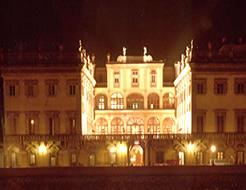
Maria Maddalena Macchiavelli, wife of Marchese Filippo Corsini, purchased the Palace from the Grand Duke Ferdinando II de' Medici in 1649.
Originally, the Palace which was a "Casino" (a little... [...]
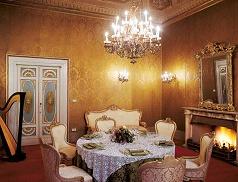
Continuing on the left side of the palace in Via del Bargello along Ghibellina street we arrive at the number 110 at the Palazzo Borghese, built in just six months in 1821, incorporating the existing... [...]
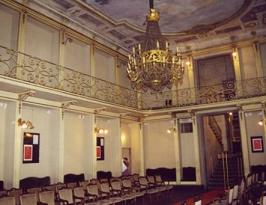
The Palazzo Rinuccini is located in the area of ??Borgo San Frediano (particularly populated area and that keeps most of the other ancient features), near the homonymous door of San Frediano, just a... [...]
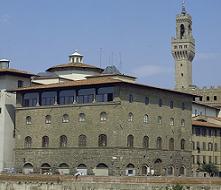
The Castellani palace, home to the Institute and Museum of the History of Science, is adjacent to the Uffizi Gallery and has its main façade and entrance into Piazza dei Giudici, while on the... [...]
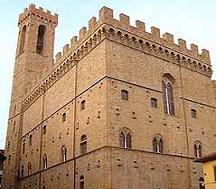
The Palace of Podestà or Bargello, was begun in 1255 by the Florentine 'People' for his Captain. From 1574 it was the seat of the Bargello or Captain of Justice. In this period the interior of the... [...]
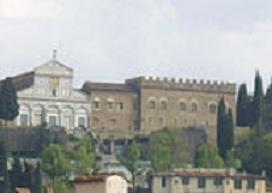
Located on the right side of the church of San Miniato a Monte the Palazzo dei Vescovi was begun in 1295 by Bishop Andrea de Mozzi and completed in the year 1320. Initially it was owned by the... [...]
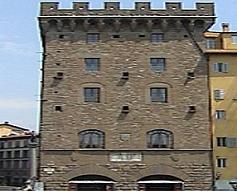
After Ponte Vecchio continuing along Via Lungarno Acciaiuoli and reaching the intersection with Via de' Tornabuoni, the place where once flowed Mugnone river we find the Palazzo Spini Ferroni built... [...]
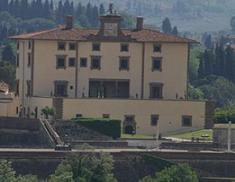
Located at the center of the fortified of Forte Belvedere, near the Boboli Gardens, it is mainly open and used on special occasions such as exhibitions and events. It was built before the fort of the... [...]
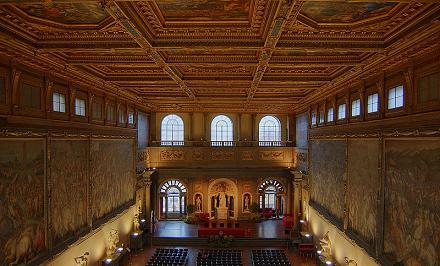
The Salone dei Cinquecento in Florence is located inside Palazzo Vecchio, which has been the seat of the city's institutions for centuries. The monumental and political heart of Palazzo Vecchio is... [...]
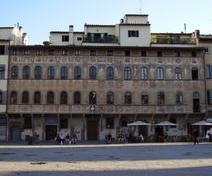
Just in Piazza Santa Croce on the right side of the church of Santa Croce the palace of Antella is situated at numbers 20, 22 and it is the most impressive among those who are on this side.
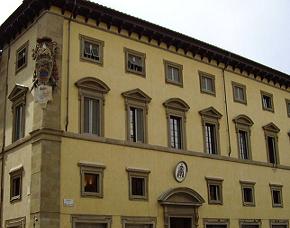
Located in the immediate vicinity of the Baptistery of Florence at number 3 in the Piazza di San Giovanni the Archbishop's Palace (Arcivescovile palace). The Arcivescovile Palace was damaged in a... [...]
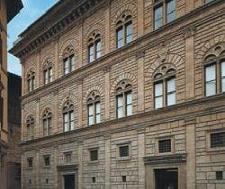
The Rucellai Palace of Florence has been constructed between 1446 and the 1451 by Bernardo Rossellino on design of the Alberti on order of Giovanni il Magnifico, member of the illustrious Rucellai... [...]
Comments